
Whenever I mention “neglect” in my titles, my biggest fear is people thinking it’s okay to neglect a certain plant, as it will be beneficial for its growth.
To be honest, that’s just NOT TRUE! Neglect in the context of growing plants simply means that they don’t need excessive love and attention to grow optimally.
That said, in today’s article, we’ll be going over a curated list of plants that can be grown as garden borders and thrive on “neglect”. Without wasting any more time, let’s dive right into it!
P.S. We’ll be focusing on non-invasive species only.
What Makes A Plant “Thrive On Neglect”?

These plants do not and should not wilt after a missed watering. Infrequent rainfall alone should be enough for them to thrive.
No spraying, no stress. These plants rarely need intervention, as pest issues typically aren’t very common with them. Forget the stress of an infestation, these plants should be good in most cases.
Plants that thrive on neglect are naturally tidy growers that keep their shape and bloom well without needing constant grooming. You should be able to just let these plants be and expect minimal work to be put into maintaining them.
They return every year or reseed without becoming invasive. Invasive plants are the biggest no-no for garden borders, since their invasive nature means they’ll spread aggressively and not stay in one place…which is what borders aim to achieve.
And if you’re looking for the same low-effort beauty indoors, this guide on houseplants that don’t need much water or attention has you covered.
Plants For Beautiful, Low-Maintenance Borders
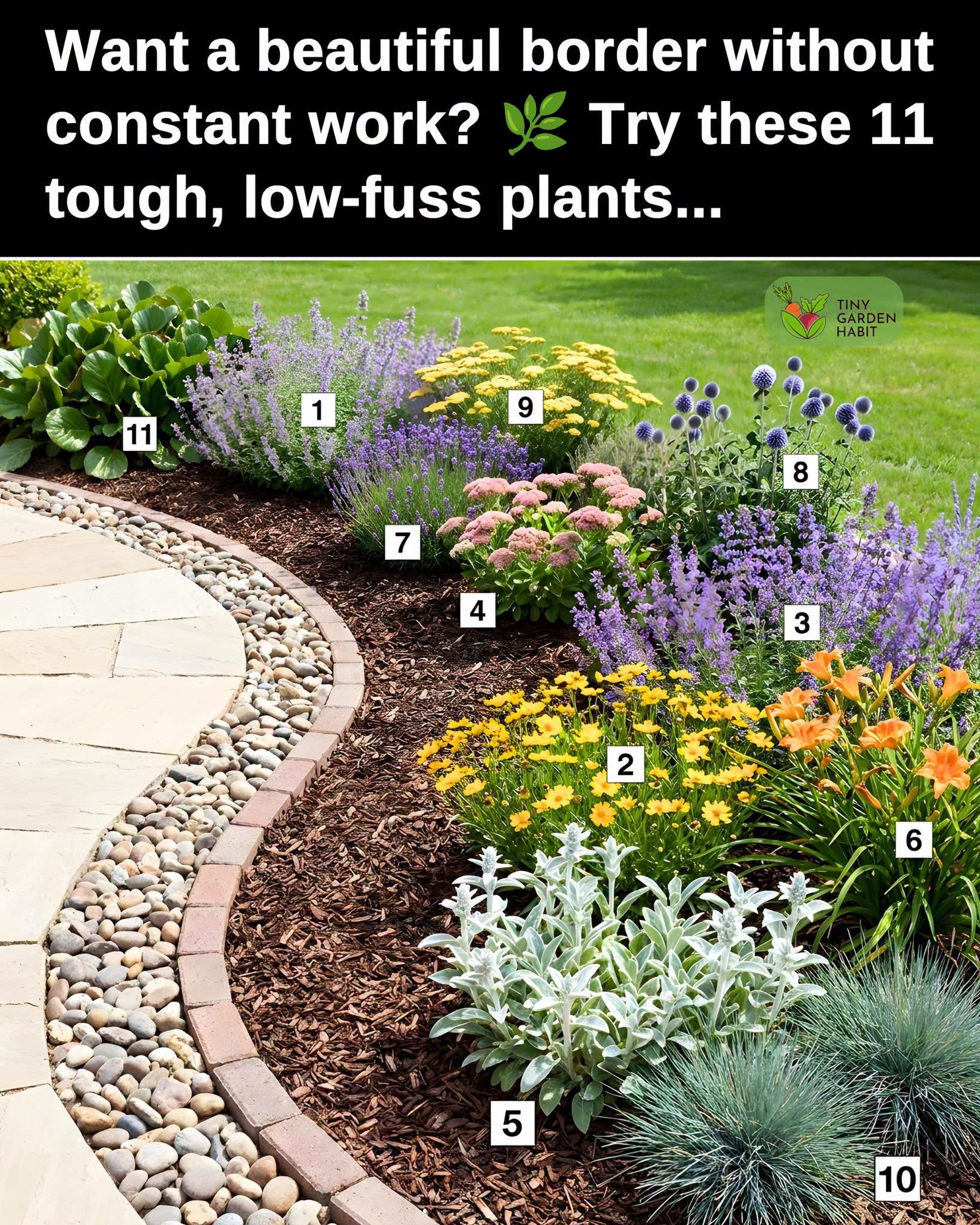
1: Catmint (Nepeta Faassenii)

The catmint is a sterile hybrid that won’t reseed aggressively and has a long bloom season, excellent drought-tolerance, and is super pollinator-friendly.
2: Coreopsis (Coreopsis Verticillata, e.g. ‘Moonbeam’)

The Moonbeam coreopsis variety is a non-spreading clump-former that reseeds modestly and loves heat. It requires very little care once established.
3: Russian Sage (Perovskia Atriplicifolia)

Although not truly a sage, Russian sage is non-spreading and tolerant of poor soil. It offers majestic blue-purple flowers and silvery stems that visually stand out in the garden.
4: Sedum ‘Autumn Joy’ (Hylotelephium Telephium)

Most sedum varieties grow in clumps and stay where they’re planted. They produce excellent fall color and rich nectar for pollinators.
5: Lamb’s Ear (Stachys Byzantina, Non-Flowering Types ‘Silver Carpet’)

Lamb’s ears typically form slow-moving mats, but they’re definitely not aggressive spreaders. This is a fantastic edging plant with a very unique texture.
6: Daylily (Hemerocallis Hybrids, Clump-Forming Types)

When it comes to daylilies, choose named varieties that don’t aggressively self-seed. They have very low care requirements and an excellent color range.
If you’re looking for even more flowers (not all native!) that thrive on minimal care, this guide on flowers that thrive on neglect is a great place to start.
CONTINUED ON THE NEXT PAGE
